
Date not listed · Save Kenya Water Towers
What Is FMNR and Why does it Matter in Restoration Work ?
Stories and field notes from Save Kenya Water Towers.
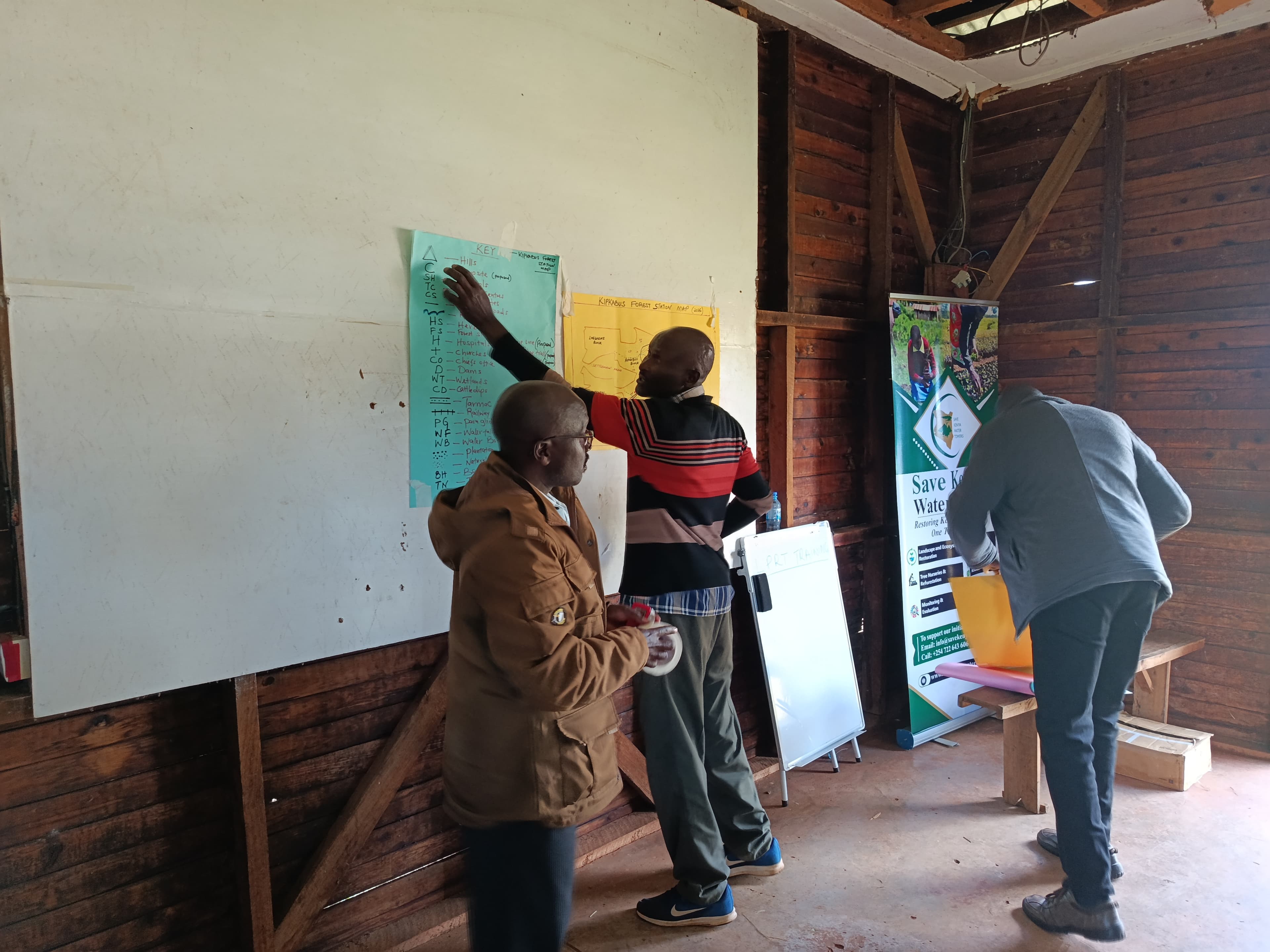
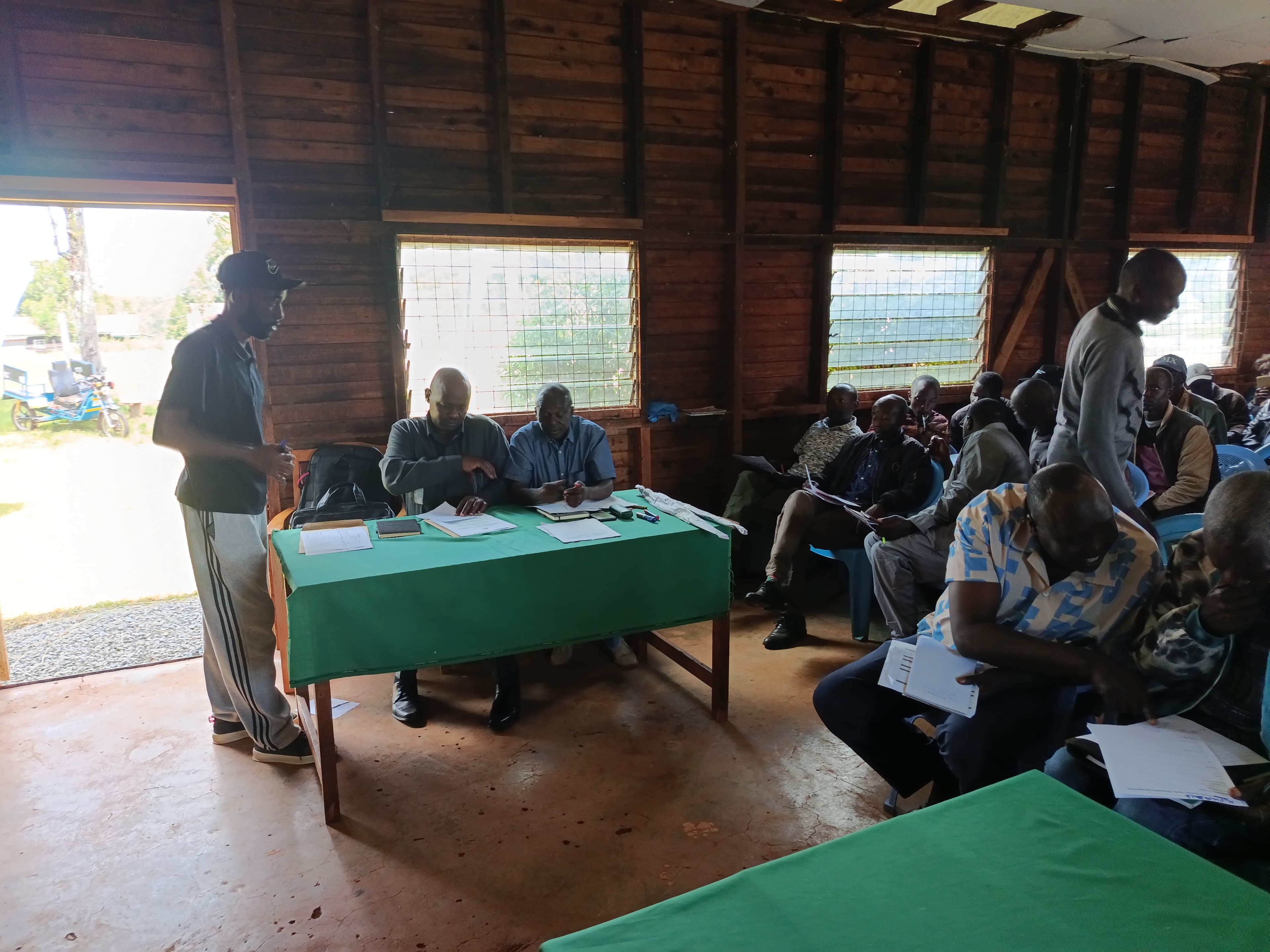
Farmer Managed Natural Regeneration (FMNR) is a low-cost land restoration technique in which farmers regrow trees and shrubs from living stumps, roots and seeds already present in the soil, rather than planting new seedlings. It involves selecting, pruning, thinning and protecting trees that regenerate from re-sprouting rootstock or seeds, restoring vegetation with little to no seedling propagation needed. The practice works by thinning shoots from tree stumps or wild saplings to rapidly foster their growth into mature trees.
The idea was pioneered in Niger in 1983 by Tony Rinaudo, then a young agronomist frustrated by failed tree-planting campaigns. He discovered that what looked like barren farmland was in fact sitting on an “underground forest” of living root systems, capable of resprouting if farmers simply protected and managed the shoots instead of clearing them.
How It Works: The Core Technique
FMNR draws on the centuries-old practice of coppicing and pollarding. The basic steps, as documented across multiple field guides, are consistent:
Survey the land to identify living stumps and self-sown wildings, often small enough to be mistaken for weeds or shrubs.
Select the strongest stems on each stump, typically leaving five or so of the tallest and straightest.
Cull the excess shoots, using the cut material for firewood, and leave the cut leaves on the ground where they suppress erosion and return nutrients to the soil.
Prune the remaining stems roughly halfway up, cutting upward to avoid tearing the bark.
Return every two to six months for follow-up pruning, removing unwanted new growth and side branches to speed up straight, vigorous growth.
Protect the site from uncontrolled grazing and fire until the regrowth is tall enough to withstand browsing.
Farmers are free to adapt density and timing to their own needs. Recommended planting density when intercropped with cereals is commonly cited at 50 to 100 trees per hectare, though this varies by species and purpose. For fruit or timber trees, a single dominant stem is often favoured for faster, straighter growth.
Variants and Related Techniques
FMNR proper – applied on active farmland, integrated directly with crops and grazing.
Assisted Natural Regeneration (ANR) – the broader umbrella term, typically applied on forest land, abandoned land or livestock exclosures rather than farmland under active cultivation. This is the version SKWT is already implementing under Terrafund for AFR100 of its WRI-funded programme, alongside agroforestry.
Intensive FMNR – a more aggressive form where every sprouting stump on a plot is deliberately managed for maximum wood or fruit yield, rather than a lighter-touch approach that leaves some regeneration unmanaged.
Examples from Other Organisations
Niger, where FMNR began, remains the flagship case. Farmer-led regreening restored roughly 200 million trees across 5 million hectares of degraded farmland, with FMNR spreading at a rate of 250,000 hectares per year over two decades. Notably, this happened with minimal government support at the time and, in Rinaudo's account, despite forestry policies that actively discouraged it.
Ethiopia's Humbo project, launched by World Vision in 2006, turned a community-managed reforestation effort into one of the earliest FMNR-based carbon projects. Within a year, communities that had previously had to buy firewood were meeting their own domestic needs and selling surplus wood and hay.
Malawi offers a striking, under-reported case: satellite data uncovered in 2019 revealed large-scale farmer-led regreening had already reached 3.2 million hectares, alongside similar spread in Mali, Chad and Ethiopia.
Kenya is one of World Vision's four designated catalyst countries for scaling FMNR (alongside Ethiopia, Uganda and Zambia), chosen for its combination of degraded and arid land, high poverty levels, and government commitment to restoration. World Vision's Kenya figures put direct FMNR-influenced coverage at roughly 745,000 hectares, with an indirect spread effect covering a further 3.76 million hectares. Kenya has separately committed to restoring 5.1 million hectares under the Bonn Challenge. Closer to home, a WOCAT-documented case from Baringo County (Van Schoubroeck, 2018) found that integrating trees into farming systems reduced the variability of food and fodder production, a direct neighbour to Elgeyo Marakwet's own restoration challenges.
Policy Dimension
FMNR's growth has consistently outpaced the policy environment around it. Land users' rights over trees on their own land are the single biggest enabling factor: laws granting user rights or ownership rights to land users, and laws enabling fair, transparent marketing of FMNR products, tend to increase confidence and uptake of the practice. Where tenure is unclear, farmers have little incentive to protect regrowth they may not be allowed to harvest or sell.
World Vision's current Ethiopia scaling plan illustrates what an enabling policy push looks like in practice: undertaking formal policy review and dialogue forums for dryland restoration, and building coalitions between government, technical partners and community “FMNR champions” through National Alliance and Centre of Expertise platforms. The pattern across catalyst countries is similar: national restoration pledges (Bonn Challenge, UNCCD commitments) create the political opening, but uptake still depends on translating that into secure, farmer-level rights to the trees being managed.
Agriculture Integration
FMNR is deliberately designed to sit inside active farming systems rather than compete with them:
Soil fertility: leaf litter and nutrient cycling from regenerated trees improve soil structure over time, reducing dependence on external inputs.
Microclimate: tree cover buffers crops against wind, heat and evapotranspiration, which supports more stable yields.
Diversified income: farmers gain staggered returns – firewood from year one, saleable branches from year two, and longer-term fruit, fodder or timber – without giving up cropland.
Resilience evidence: following FMNR implementation in Ethiopia, over 80% of surveyed farmers reported reduced on-farm soil erosion, and 74% reported increased soil fertility. In Senegal and Ghana, households practising FMNR reported lower vulnerability to drought and storm damage compared with non-practising neighbours.
Why It's Considered Sustainable
Cost: it requires no nursery, seedlings or planting budget, only labour and a pruning tool most farmers already own, making it accessible to poor and land-constrained households.
Survival rates: because regrowth draws on established root systems rather than young transplants, FMNR trees generally establish faster and survive better than newly planted seedlings, a known weak point of conventional reforestation.
Local ownership: because farmers manage the regrowth on their own land for their own benefit (firewood, fodder, fruit, income), maintenance continues without ongoing donor input, unlike planted trees that are often abandoned once project funding ends.
The SKWT Connection
SKWT's work – agroforestry and Assisted Natural Regeneration across Ngobisi, Soyo and Kipkanao – sits in the same family of practice as FMNR, and the same enabling conditions (secure land access, farmer ownership, low input cost) apply directly to it. Champion farmers such as Mama Miriam on the Spencer Line, an established champion farmer for the avocado agroforestry initiative who also championed her village's move to establish a coffee nursery, exemplify the same farmer-led ownership model that underpins FMNR's success elsewhere – a useful reference point if SKWT wants to frame its own community-led restoration story for donors or a web story audience.